Choosing the right health insurance plan isn’t just about finding the lowest monthly premium. A good comparison helps you understand the total value of each plan, including its coverage, healthcare providers, prescription benefits, and overall costs.
By comparing plans carefully, you can choose one that matches your healthcare needs while helping you manage medical expenses more effectively.
This guide explains the most important factors to compare before enrolling in a health insurance plan.
Why Comparing Health Insurance Plans Matters
Every insurance plan is different.
Comparing plans helps you:
- Find better healthcare coverage
- Reduce unexpected medical costs
- Access preferred doctors and hospitals
- Save money over time
- Understand policy benefits before enrolling
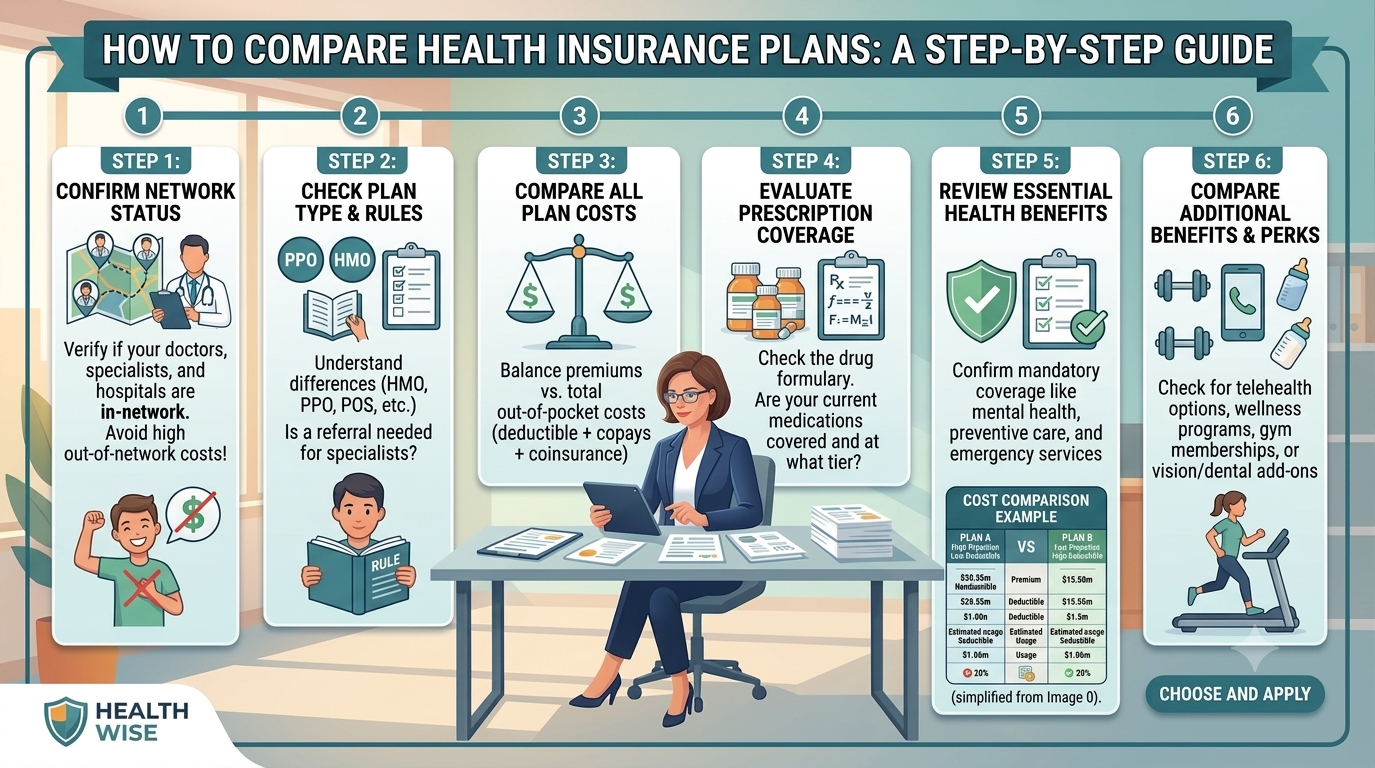
Step 1: Compare Monthly Premiums
The monthly premium is the amount you pay to keep your health insurance active.
A lower premium may look attractive, but it could come with:
- Higher deductibles
- Higher copayments
- Fewer covered services
Always compare the total value instead of focusing only on the monthly payment.
Step 2: Review the Deductible
The deductible is the amount you generally pay before your insurance begins sharing eligible healthcare costs.
Ask yourself:
- Can I comfortably afford this deductible?
- Does the deductible fit my budget?
Step 3: Compare Provider Networks
Check whether your preferred:
- Doctor
- Hospital
- Specialist
- Pharmacy
are included in the insurance provider’s network.
Using in-network providers usually lowers your healthcare costs.
Step 4: Check Covered Services
Review what each plan covers.
Common healthcare services include:
- Doctor visits
- Hospital care
- Emergency services
- Preventive care
- Prescription medications
- Laboratory tests
- Mental health services
Remember that coverage differs from one policy to another.
Step 5: Compare Prescription Drug Coverage
If you regularly take medications, compare:
- Covered prescriptions
- Pharmacy network
- Medication costs
- Refill policies
Prescription coverage can significantly affect your yearly healthcare expenses.
Step 6: Understand Out-of-Pocket Costs
Besides premiums, compare:
- Deductibles
- Copayments
- Coinsurance
- Annual out-of-pocket maximum
Looking at all these costs gives you a clearer picture of the plan’s overall affordability.
Step 7: Compare Extra Benefits
Some plans may include additional benefits such as:
- Telehealth services
- Wellness programs
- Preventive screenings
- Mental health support
- Maternity care
Compare these benefits based on your healthcare needs.
Step 8: Read the Policy Carefully
Before enrolling:
✔ Read the Summary of Benefits.
✔ Review exclusions.
✔ Understand limitations.
✔ Check waiting periods.
✔ Know how claims are processed.
Never purchase a policy without understanding its terms.
Common Mistakes When Comparing Plans
Avoid these mistakes:
- Choosing only the cheapest plan
- Ignoring deductibles
- Forgetting prescription drug coverage
- Not checking provider networks
- Ignoring annual healthcare costs
- Failing to read the policy
Comparison Checklist
Before choosing a plan, compare:
✅ Monthly premium
✅ Deductible
✅ Copayment
✅ Coinsurance
✅ Provider network
✅ Prescription coverage
✅ Covered healthcare services
✅ Annual out-of-pocket costs
✅ Customer support